How Fire Monitoring Systems Reduce Fire Risks in Large Buildings?
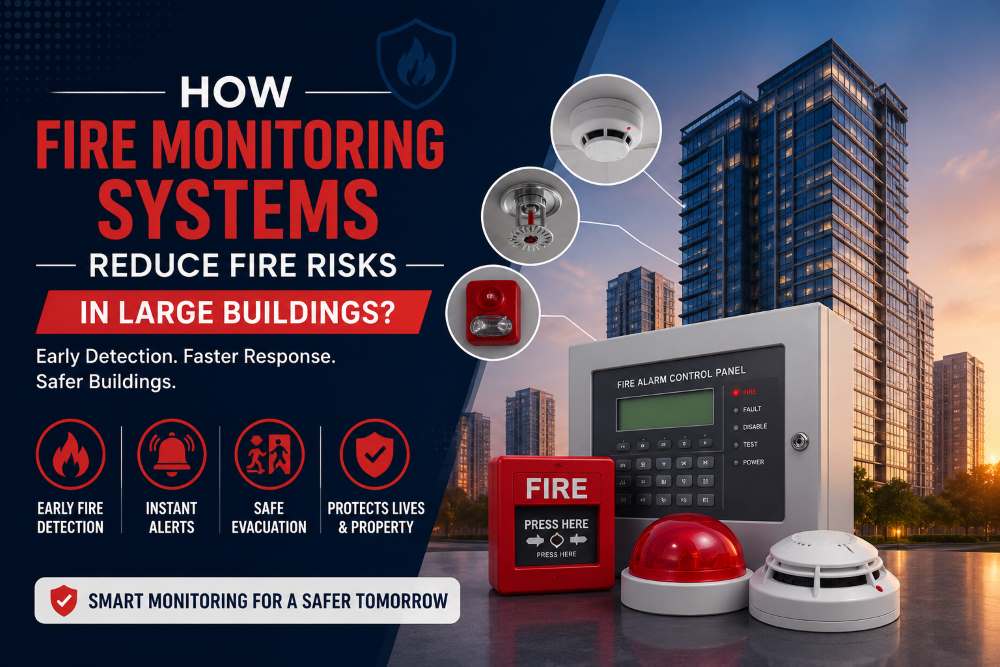
Large buildings such as shopping malls, offices, hospitals, hotels, factories, and residential towers face a higher risk of fire accidents. With many people, electrical systems, machines, and valuable assets inside one building, even a small fire can quickly become dangerous. This is why modern Fire Monitoring Systems are very important for safety and protection.
A fire monitoring system helps detect fire risks early, sends alerts immediately, and supports fast action before the fire spreads. These systems are designed to protect people, property, equipment, and business operations. In today’s world, installing a reliable fire monitoring system is not just a safety option but a necessity for every large building.
What Are Fire Monitoring Systems?
Fire Monitoring Systems are advanced safety systems that continuously monitor buildings for signs of fire or smoke. These systems use sensors, alarms, control panels, and communication devices to identify fire-related dangers at an early stage.
The main purpose of these systems is to:
- Detect smoke, heat, or flames quickly
- Alert occupants and emergency teams
- Reduce fire damage
- Help in fast evacuation
- Improve overall building safety
These systems are commonly connected with fire alarms, sprinklers, fire hydrants, emergency lighting, and security systems.
Why Large Buildings Need Fire Monitoring Systems
Large buildings have complex structures and many fire risk points. Electrical faults, overloaded systems, cooking equipment, flammable materials, and machinery can increase the chance of fire accidents.
Without proper monitoring, fires can spread rapidly and create serious damage. Fire Monitoring Systems help reduce these dangers by providing constant supervision and instant alerts.
Common Fire Risks in Large Buildings
- Electrical short circuits
- Overheated machines
- Gas leaks
- Faulty wiring
- Smoking in restricted areas
- Chemical storage hazards
- Human negligence
By detecting these risks early, businesses can prevent major accidents and protect lives.
Early Fire Detection Saves Lives
One of the biggest benefits of Fire Monitoring Systems is early detection. In many fire accidents, delays in identifying the problem cause serious injuries and heavy property damage.
Modern fire monitoring systems can detect:
- Smoke particles
- Sudden temperature rise
- Flame presence
- Gas leakage
- Equipment overheating
Once the system detects danger, alarms start immediately. This gives people enough time to leave the building safely and allows firefighters to respond quickly.
Early detection can make a huge difference between a small incident and a major disaster.
Continuous Monitoring for Better Safety
Unlike manual inspections, Fire Monitoring Systems work 24/7 without stopping. They continuously monitor all areas of the building, including:
- Server rooms
- Parking areas
- Storage sections
- Electrical rooms
- Kitchens
- Production units
- Office floors
This constant monitoring reduces the chances of unnoticed fire hazards.
Even during nights, holidays, or low-staff hours, the system keeps working and protects the property at all times.
Faster Emergency Response
In a fire emergency, every second matters. Fire Monitoring Systems quickly send alerts to:
- Building management
- Security teams
- Fire departments
- Emergency response teams
Some advanced systems also send notifications through mobile apps, SMS, or remote monitoring centers.
This fast communication helps emergency teams reach the location quickly and control the fire before it spreads further.
Reduces Property Damage
Large buildings often contain expensive equipment, important documents, inventory, and valuable infrastructure. Fire accidents can lead to massive financial losses.
By identifying fire risks early, Fire Monitoring Systems help reduce:
- Structural damage
- Equipment loss
- Business interruption
- Inventory destruction
- Repair costs
For industries and commercial buildings, preventing downtime is very important. A small investment in fire monitoring can save huge amounts of money in the future.
Supports Safe Evacuation
During a fire emergency, panic can create confusion and increase danger. Fire Monitoring Systems help people evacuate safely through:
- Loud warning alarms
- Emergency exit guidance
- Voice evacuation systems
- Emergency lighting activation
This organized evacuation process helps reduce injuries and improves overall safety.
In crowded buildings like malls, hotels, and hospitals, proper evacuation support is extremely important.
Integration with Other Fire Safety Systems
Modern Fire Monitoring Systems can work together with multiple fire safety solutions. This creates a complete protection system for the building.
These systems can integrate with:
- Fire alarms
- Sprinkler systems
- Smoke detectors
- CCTV cameras
- Access control systems
- Emergency ventilation systems
For example, when smoke is detected, the system can automatically activate sprinklers and unlock emergency exits.
This automatic coordination improves fire control and minimizes risks.
Helps Meet Fire Safety Regulations
Government authorities and safety departments require many commercial and industrial buildings to follow fire safety regulations.
Installing Fire Monitoring Systems helps businesses:
- Meet safety compliance standards
- Pass fire inspections
- Reduce legal risks
- Improve workplace safety
Proper fire monitoring also shows that the company cares about employee and visitor safety.
Improves Employee and Visitor Confidence
People feel safer when they know a building has proper fire protection systems. Employees can work confidently, and visitors feel more secure in the environment.
This is especially important for:
- Corporate offices
- Hospitals
- Hotels
- Educational institutions
- Shopping complexes
A safe workplace also improves business reputation and trust.
The Role of Technical Manpower in Fire Safety
Installing Fire Monitoring Systems is only the first step. Regular maintenance, inspections, and monitoring are equally important.
Professional technical manpower services help ensure that the system works properly at all times.
Experienced technicians can:
- Inspect equipment regularly
- Identify faults quickly
- Perform preventive maintenance
- Repair damaged components
- Test alarms and detectors
- Ensure system efficiency
Reliable technical support from Elixir Engineering helps businesses maintain strong fire protection systems and reduce safety risks.
Industries That Benefit from Fire Monitoring Systems
Almost every industry can benefit from advanced Fire Monitoring Systems. Some common sectors include:
Commercial Buildings
Office buildings require strong fire monitoring due to electrical systems, crowded spaces, and valuable equipment.
Manufacturing Industries
Factories use machines, chemicals, and heavy electrical loads that increase fire risks.
Hospitals
Hospitals need continuous fire monitoring to protect patients, medical equipment, and emergency operations.
Hotels
Hotels must ensure guest safety with quick fire detection and evacuation systems.
Shopping Malls
Large crowds and multiple shops make malls highly dependent on fire safety systems.
Warehouses
Storage facilities often contain flammable materials that require continuous monitoring.
Benefits of Smart Fire Monitoring Technology
Modern technology has improved the performance of Fire Monitoring Systems. Smart systems now offer:
- Real-time monitoring
- Mobile alerts
- Cloud-based reporting
- Remote access
- Automatic fault detection
- AI-based risk analysis
These advanced features help building owners respond faster and manage fire safety more effectively.
How to Choose the Right Fire Monitoring System
Choosing the right system depends on the building type, size, and fire risks.
Here are some important points to consider:
Building Size
Large buildings need wider coverage and multiple monitoring zones.
Type of Risk
Industrial buildings may need heat and gas detection along with smoke monitoring.
Integration Features
Choose systems that can connect with sprinklers, alarms, and CCTV systems.
Maintenance Support
Always work with experienced professionals for regular maintenance and support.
Compliance Standards
Ensure the system meets local fire safety regulations.
Importance of Regular Maintenance
Even the best Fire Monitoring Systems need regular maintenance. Dust, damaged wiring, sensor failure, or battery problems can reduce system performance.
Regular maintenance helps:
- Keep sensors accurate
- Prevent false alarms
- Improve system lifespan
- Ensure emergency readiness
- Reduce system downtime
Professional technical teams can perform routine inspections and keep the entire system in good working condition.
Future of Fire Monitoring Systems
The future of fire safety is becoming smarter and more connected. New technologies are making Fire Monitoring Systems more accurate and efficient.
Future systems may include:
- AI-powered fire prediction
- Smart building integration
- IoT-based sensors
- Advanced remote monitoring
- Automated emergency response systems
These innovations will help reduce fire risks even further and improve safety standards in modern buildings.
Conclusion
Fire accidents in large buildings can cause major damage, financial loss, and danger to human life. This is why advanced Fire Monitoring Systems are essential for modern safety management.
These systems help detect fire risks early, improve emergency response, support safe evacuation, and reduce property damage. When combined with professional maintenance and technical manpower support, they provide complete fire protection for commercial, industrial, and residential buildings.
Businesses looking to improve safety and maintain reliable fire protection systems can benefit from expert services offered by Elixir Engineering.
Frequently Asked Questions
1. What are Fire Monitoring Systems?
Fire Monitoring Systems are safety systems that detect smoke, heat, or fire and send alerts to prevent major fire accidents.
2. Why are Fire Monitoring Systems important in large buildings?
They help detect fire risks early, improve emergency response, and protect people and property from serious damage.
3. Can Fire Monitoring Systems work 24/7?
Yes, these systems continuously monitor buildings day and night without interruption.
4. Do Fire Monitoring Systems reduce property damage?
Yes, early fire detection helps control fires quickly and reduces damage to buildings and equipment.
5. What industries need Fire Monitoring Systems?
Industries such as manufacturing, healthcare, hospitality, commercial offices, malls, and warehouses need fire monitoring systems.
6. How often should Fire Monitoring Systems be maintained?
Regular inspections and maintenance should be done to ensure proper system performance and safety compliance.
7. Can Fire Monitoring Systems connect with other safety systems?
Yes, modern systems can integrate with sprinklers, alarms, CCTV cameras, and emergency response systems.
8. Why choose professional technical manpower services for fire safety?
Professional technicians help maintain system efficiency, identify problems early, and ensure continuous fire protection.