
What Is an Access Control System? Benefits, Types, and Installation Guide
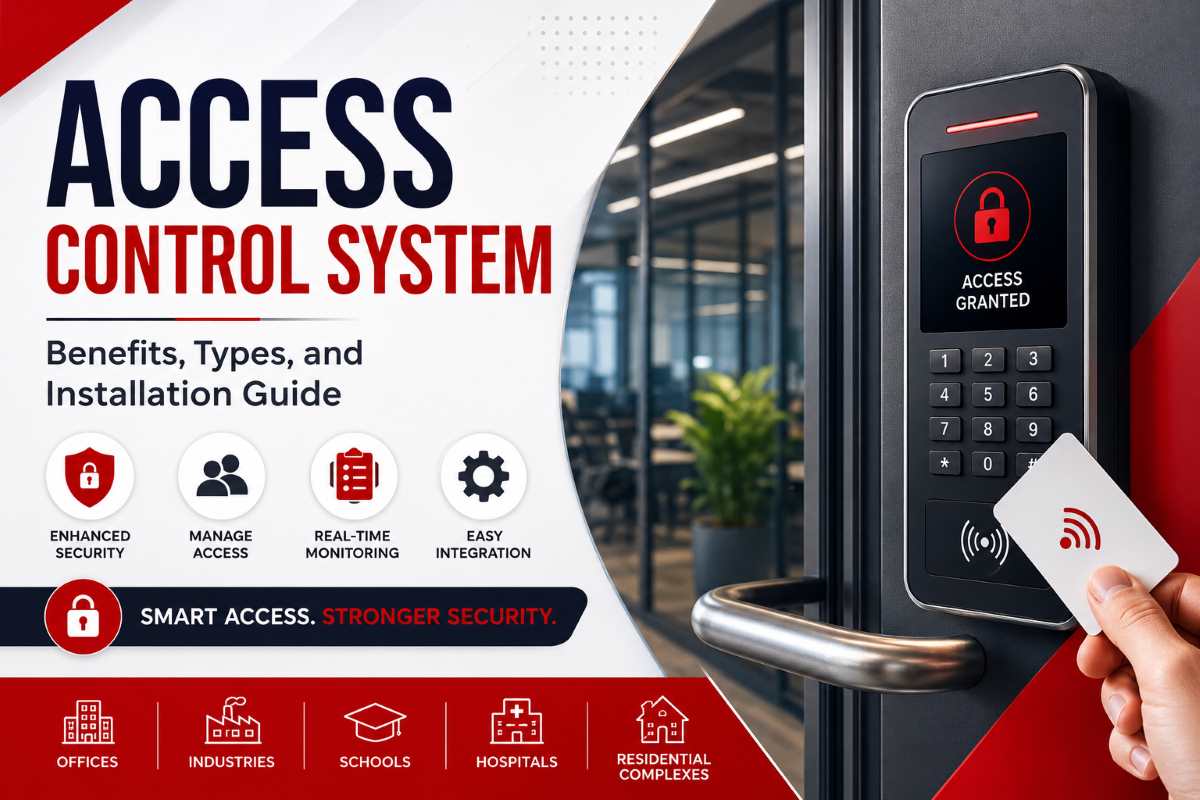
Security is one of the most important concerns for businesses, industries, offices, schools, hospitals, and residential properties. Traditional locks and keys can help protect a property, but they often have limitations. Lost keys, unauthorized duplication, and limited monitoring capabilities can create security risks.
This is where an Access Control System becomes an ideal solution. It provides a modern and reliable way to manage who can enter specific areas of a building. From small offices to large industrial facilities, access control systems help improve security, track movement, and protect valuable assets.
What Is an Access Control System?
An Access Control System is an electronic security solution that controls and monitors access to a building, room, gate, or restricted area. Instead of using traditional keys, authorized users can gain entry through access cards, PIN codes, biometric verification, mobile applications, or other credentials.
The system allows administrators to decide who can enter certain locations and at what times. This helps prevent unauthorized access while improving overall security management.
Access control systems are widely used in:
- Corporate offices
- Industrial facilities
- Warehouses
- Educational institutions
- Hospitals
- Government buildings
- Residential complexes
- Data centers
- Retail stores
How Does an Access Control System Work?
An Access Control System works by verifying a person’s credentials before granting entry.
The process usually follows these steps:
1. User Presents Credentials
The user scans a card, enters a PIN, uses a fingerprint, facial recognition, or mobile access credential.
2. Credential Verification
The system checks whether the credential matches authorized records stored in the database.
3. Access Decision
If the credentials are valid, the system unlocks the door or gate. If not, access is denied.
4. Activity Recording
Every entry attempt is recorded. Administrators can review logs and monitor movement throughout the facility.
This process happens within seconds, ensuring both convenience and security.
Main Components of an Access Control System
A complete Access Control System consists of several important components.
Access Credentials
These identify authorized users and may include:
- RFID cards
- Smart cards
- PIN codes
- Fingerprints
- Facial recognition
- Mobile credentials
Readers
Readers collect credential information and send it for verification.
Control Panel
The control panel acts as the brain of the system and processes all access requests.
Electronic Locks
Electronic locks automatically open when access is approved.
Management Software
Software allows administrators to manage users, generate reports, and monitor activities in real time.
Types of Access Control Systems
Different organizations have different security requirements. Therefore, several types of access control systems are available.
Discretionary Access Control (DAC)
In this system, the owner decides who receives access permissions.
Best For:
- Small offices
- Residential properties
- Small businesses
Mandatory Access Control (MAC)
Access permissions are controlled by administrators based on security policies.
Best For:
- Government facilities
- Military installations
- High-security organizations
Role-Based Access Control (RBAC)
Access is granted according to an employee’s role within the organization.
For example:
- Managers can access management areas.
- Employees can access workspaces.
- Visitors have limited access.
Best For:
- Corporate offices
- Educational institutions
- Hospitals
Rule-Based Access Control
Access is granted according to predefined rules such as time schedules or specific conditions.
Best For:
- Industrial facilities
- Manufacturing plants
- Warehouses
Biometric Access Control
This system uses unique physical characteristics such as fingerprints, facial recognition, or iris scanning.
Best For:
- High-security environments
- Data centers
- Research facilities
Benefits of an Access Control System
Installing an Access Control System offers several advantages beyond basic security.
Enhanced Security
The primary benefit is stronger protection against unauthorized access. Only approved individuals can enter restricted areas.
Elimination of Traditional Keys
Lost or stolen keys can become a security threat. Access control systems remove this concern by using digital credentials.
Better Employee Management
Administrators can easily add, modify, or remove user permissions without changing locks.
Real-Time Monitoring
Every entry and exit is recorded, making it easier to track activities and investigate incidents.
Reduced Security Costs
Businesses can reduce dependence on physical security measures and improve efficiency.
Improved Convenience
Authorized personnel can quickly access permitted areas without carrying multiple keys.
Scalable Security
As a business grows, the system can be expanded to include additional doors, users, and locations.
Compliance Support
Many industries require detailed access records for audits and regulatory compliance. Access control systems help meet these requirements.
Where Should You Install an Access Control System?
Access control systems can be installed in many areas depending on security needs.
Main Entrances
Control who enters the building and maintain visitor records.
Server Rooms
Protect sensitive data and IT infrastructure.
Executive Offices
Restrict access to confidential information and critical operations.
Warehouses
Secure valuable inventory and equipment.
Laboratories
Prevent unauthorized access to research and testing areas.
Manufacturing Facilities
Protect machinery and restricted production zones.
Parking Areas
Manage vehicle access and improve site security.
Residential Communities
Provide controlled entry for residents and visitors.
Access Control System Installation Guide
Proper installation plays a major role in system performance and reliability.
Step 1: Security Assessment
Begin by identifying security risks and determining which areas require protection.
Step 2: Define Access Levels
Decide who should have access to specific locations and establish permission levels.
Step 3: Choose the Right Technology
Select appropriate credentials such as cards, biometrics, or mobile access based on your requirements.
Step 4: Install Hardware
Install readers, controllers, locks, and related equipment at designated access points.
Step 5: Configure Software
Set up users, schedules, access rules, and monitoring features.
Step 6: Test the System
Verify that all components function correctly before deployment.
Step 7: Employee Training
Train users and administrators to ensure smooth operation and effective management.
Common Industries Using Access Control Systems
Many industries rely on access control systems to maintain security and operational efficiency.
Corporate Offices
Manage employee access and protect confidential information.
Healthcare Facilities
Secure patient records, pharmacies, and restricted medical areas.
Educational Institutions
Control access to classrooms, laboratories, and administrative offices.
Manufacturing Plants
Protect production lines and sensitive equipment.
Hotels
Manage guest and staff access efficiently.
Retail Stores
Secure inventory rooms and restricted areas.
Data Centers
Protect critical servers and digital infrastructure.
Why Choose Elixir Engineering for Access Control System Installation?
When implementing an Access Control System, choosing an experienced service provider is essential.
Elixir Engineering offers professional access control solutions designed to meet the unique security needs of businesses, industries, institutions, and commercial properties.
With expertise in system design, installation, integration, and maintenance, Elixir Engineering helps clients achieve reliable security and efficient access management. Their team ensures every solution is customized to provide maximum protection, ease of use, and long-term performance.
Whether you need a simple access control setup or an advanced integrated security system, Elixir Engineering can deliver a solution that fits your requirements.
Conclusion
An Access Control System is an essential security solution for modern organizations. It provides controlled access, improves safety, eliminates the challenges associated with traditional keys, and helps businesses monitor activities effectively.
From offices and hospitals to industrial facilities and residential communities, access control systems offer a flexible and scalable way to protect people, assets, and information.
By choosing the right system and ensuring professional installation, organizations can significantly strengthen their security infrastructure and improve operational efficiency.
Frequently Asked Questions
1. What is an Access Control System?
An Access Control System is a security solution that manages and restricts entry to specific areas using credentials such as cards, PINs, biometrics, or mobile devices.
2. Where can an Access Control System be installed?
It can be installed in offices, factories, hospitals, schools, warehouses, residential complexes, parking areas, and other secure locations.
3. What are the main types of Access Control Systems?
The main types include Discretionary Access Control (DAC), Mandatory Access Control (MAC), Role-Based Access Control (RBAC), Rule-Based Access Control, and Biometric Access Control.
4. Is biometric access control more secure?
Yes. Biometric systems use unique physical characteristics such as fingerprints or facial recognition, making unauthorized access more difficult.
5. Can Access Control Systems be integrated with CCTV systems?
Yes. Many access control systems can integrate with CCTV cameras, alarms, visitor management systems, and other security solutions.
6. How much maintenance does an Access Control System require?
Regular inspections, software updates, credential management, and hardware testing help maintain optimal performance.
7. Why should businesses invest in an Access Control System?
Businesses benefit from improved security, better monitoring, reduced risks, enhanced employee management, and greater control over sensitive areas.