
Understanding Type D Fire Extinguishers: When and How to Use Them
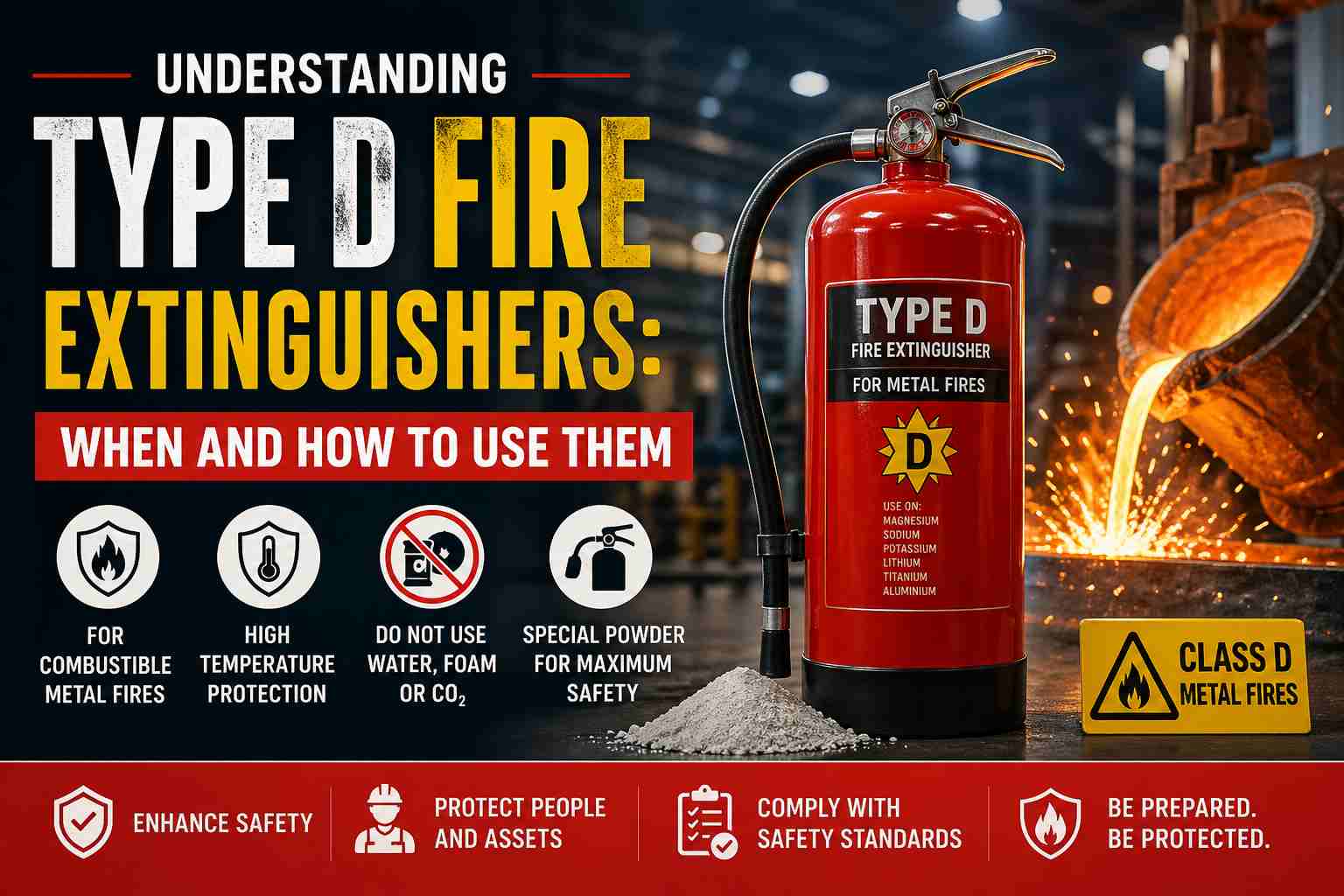
Fire safety is not just about having an extinguisher; it’s about having the right type of extinguisher for the right fire. Among all categories, Type D Fire Extinguishers are the most specialized and often misunderstood. These extinguishers are designed for a unique and dangerous category of fires that involve combustible metals.
What Are Type D Fire Extinguishers?
Type D Fire Extinguishers are specially designed to extinguish fires caused by combustible metals such as:
- Magnesium
- Sodium
- Potassium
- Lithium
- Titanium
- Aluminium powder
These types of fires are classified as Class D fires and are extremely dangerous because they burn at very high temperatures and react violently with common extinguishing agents.
Unlike regular fires, metal fires behave unpredictably and require special dry powder agents to control them.
Why Metal Fires Are So Dangerous
Metal fires are not like ordinary fires involving paper, wood, or liquids. They have unique characteristics:
- Burn at extremely high temperatures (often above 3000°C)
- React explosively with water or foam
- Can release hydrogen gas when exposed to moisture
- Spread quickly through molten metal splashes
Using the wrong extinguisher can make the situation worse instead of better.
How Type D Fire Extinguishers Work
Type D Fire Extinguishers use a special dry powder agent that works in three important ways:
- Smothers the fire by cutting off oxygen
- Absorbs heat from the burning metal
- Forms a crust layer over the metal surface to prevent re-ignition
This method is highly effective because it stabilizes the fire without causing chemical reactions.
Where Are Type D Fire Extinguishers Used?
These extinguishers are mostly used in high-risk industrial environments, such as:
- Metal processing industries
- Manufacturing plants
- Laboratories
- Aerospace and defense units
- Chemical factories
Metal fires are common in areas where metal dust, shavings, or fine particles are present.
When Should You Use Type D Fire Extinguishers?
Use Type D Fire Extinguishers only when:
✔ The fire involves combustible metals
✔ Sparks or metal dust have ignited
✔ The fire cannot be controlled by regular extinguishers
✔ You are trained to handle such equipment
Important: These extinguishers are not suitable for other fire classes like wood, liquid, electrical, or kitchen fires.
When NOT to Use Type D Fire Extinguishers
Avoid using Type D extinguishers for:
- Paper or wood fires (Class A)
- Petrol or diesel fires (Class B)
- Electrical fires (Class C)
- Kitchen oil fires (Class K/F)
Also, never use the following on metal fires:
- Water
- Foam
- CO₂
These can cause explosions or fire spread.
How to Use a Type D Fire Extinguisher (Step-by-Step)
Using a Type D Fire Extinguisher requires care and proper technique.
Follow these steps:
1. Identify the Fire
Make sure it is a metal fire (Class D).
2. Maintain Safe Distance
Stand at a safe distance to avoid heat and splashes.
3. Apply Powder Gently
Do not spray forcefully. Apply the powder slowly to avoid spreading burning metal.
4. Cover the Fire Completely
Ensure the entire burning surface is covered.
5. Allow Cooling
Do not disturb the metal until it cools down completely.
👉 Unlike other extinguishers, you should not use sweeping motion aggressively. Gentle application is key.
Types of Powder Used in Type D Fire Extinguishers
Different metals require different extinguishing agents:
- Sodium Chloride-based powder – for magnesium fires
- Copper-based powder – for lithium fires
- Graphite powder – for high-temperature metals
There is no universal powder, so choosing the right extinguisher is essential.
Key Features of Type D Fire Extinguishers
- Special low-velocity applicator
- Heat-resistant powder agents
- Designed for high-temperature fires
- Available in different capacities (4kg, 6kg, 9kg)
- Industrial-grade construction
Comparison: Type D vs Other Fire Extinguishers
| Fire Type | Suitable Extinguisher |
| Class A (wood, paper) | Water |
| Class B (liquids) | Foam / CO₂ |
| Class C (electrical) | CO₂ |
| Class D (metals) | Type D Fire Extinguishers |
| Class K/F (kitchen) | Wet Chemical |
This shows why no single extinguisher works for all fires.
Why Businesses Need Type D Fire Extinguishers
If your workplace deals with metals, having Type D Fire Extinguishers is critical.
Benefits:
- Prevents major industrial accidents
- Protects workers and assets
- Ensures compliance with fire safety norms
- Reduces fire damage risks
For industries, investing in the right fire safety system is not optional—it’s essential.
Fire Extinguisher Installation by Elixir Engineering
When it comes to reliable fire safety solutions, Elixir Engineering stands out as a trusted fire extinguisher installer for industrial, commercial, and residential spaces. With strong expertise in installing all types of extinguishers, including Type D Fire Extinguishers for high-risk metal fire environments, Elixir ensures your property is fully protected and compliant with safety standards. Their team handles everything from site inspection and system selection to professional installation and maintenance. If you are looking for dependable fire protection services, Elixir Engineering offers complete solutions tailored to your safety needs.
Frequently Asked Questions
1. What are Type D Fire Extinguishers used for?
They are used to extinguish fires involving combustible metals like magnesium, sodium, and lithium.
2. Can water be used on metal fires?
No. Water can react violently with burning metals and cause explosions.
3. Are Type D Fire Extinguishers suitable for all fires?
No. They are only effective for Class D (metal) fires.
4. Where should Type D extinguishers be installed?
They should be installed in industries dealing with metals, labs, and manufacturing units.
5. What makes Type D fires different?
They burn at very high temperatures and react dangerously with common extinguishing agents.
6. How do Type D Fire Extinguishers work?
They form a crust over the burning metal, absorb heat, and cut off oxygen.
7. Can ABC extinguishers handle metal fires?
No. Standard ABC extinguishers are not suitable for metal fires.