
When Should You Use a Class A Fire Extinguisher? A Complete Guide?
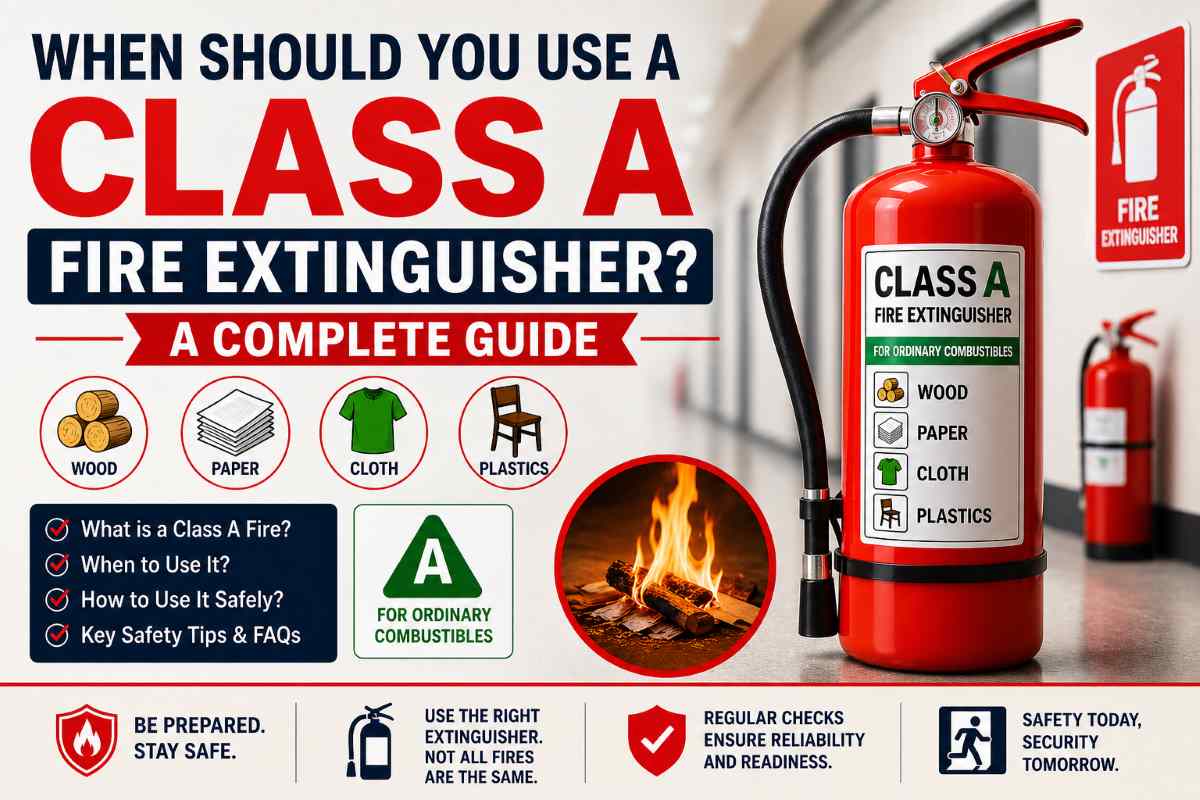
Fire safety is something everyone should understand, whether at home, in the office, or in an industrial space. One of the most common types of fire extinguishers is the Class A Fire Extinguishers, but many people are unsure about when and how to use them correctly.
What Are Class A Fire Extinguishers?
Class A Fire Extinguishers are designed to put out fires caused by ordinary combustible materials. These are materials that you find in everyday environments.
Common materials in Class A fires:
- Wood
- Paper
- Cloth and textiles
- Rubber
- Plastics
These materials burn with embers, meaning the fire can continue even after flames seem to disappear.
👉 In simple words: If something solid like paper or wood is burning, you need a Class A extinguisher.
How Do Class A Fire Extinguishers Work?
Class A extinguishers usually use water or foam as the extinguishing agent.
Working principle:
- Cooling the fire by lowering the temperature
- Removing heat so the fire cannot continue burning
Water-based extinguishers are very effective because they soak the material and stop the burning process completely.
When Should You Use a Class A Fire Extinguisher?
Understanding when to use Class A Fire Extinguishers is very important. Using the wrong extinguisher can make the situation worse.
Use it in these situations:
1. Fires Involving Paper or Cardboard
If documents, files, books, or cardboard boxes catch fire, a Class A extinguisher is the best choice.
2. Wooden Furniture Fires
Chairs, tables, cabinets, or wooden structures burning? This is a clear Class A fire.
3. Fabric or Textile Fires
Curtains, clothes, carpets, or upholstery fires can be controlled using Class A extinguishers.
4. Trash or Garbage Fires
Waste bins often contain paper, plastic, and cloth—perfect examples of Class A fire risks.
5. Office and Home Fires
Most small fires in homes and offices fall under Class A because they involve common materials.
When NOT to Use Class A Fire Extinguishers
This is just as important as knowing when to use them.
Avoid using on:
1. Electrical Fires
Water conducts electricity, so using it on electrical fires can cause electric shock.
2. Flammable Liquid Fires
Petrol, oil, or paint fires (Class B) can spread if water is used.
3. Gas Fires
Fires caused by LPG or other gases need specialized extinguishers.
4. Metal Fires
Class D fires require special extinguishing agents.
Using the wrong extinguisher can increase danger instead of reducing it.
Where Are Class A Fire Extinguishers Commonly Used?
You will find Class A Fire Extinguishers in places where ordinary combustible materials are present.
Common locations:
- Offices
- Schools and colleges
- Homes
- Warehouses
- Retail shops
- Libraries
These environments have materials like paper, wood, and fabric, making Class A extinguishers essential.
Types of Class A Fire Extinguishers
There are different types of extinguishers that work for Class A fires:
1. Water Extinguishers
- Most common type
- Simple and cost-effective
- Ideal for basic fire risks
2. Foam Extinguishers
- Works on both Class A and B fires
- Covers fire and prevents re-ignition
3. ABC Dry Powder Extinguishers
- Multi-purpose
- Works on Class A, B, and C fires
For general safety, many businesses prefer ABC extinguishers because they handle multiple fire types.
How to Identify a Class A Fire?
You can quickly identify a Class A fire by asking:
“Is the fire coming from a solid material like wood, paper, or cloth?”
If the answer is yes, it is a Class A fire.
Signs include:
- Burning smell of wood or paper
- Visible embers or glowing material
- Slow spreading flames
How to Use a Class A Fire Extinguisher (PASS Method)
Always remember the PASS technique:
P – Pull the pin
Break the safety seal.
A – Aim
Point the nozzle at the base of the fire.
S – Squeeze
Press the handle to release the extinguishing agent.
S – Sweep
Move side to side until the fire is out.
Always maintain a safe distance while using the extinguisher.
Safety Tips While Using Class A Fire Extinguishers
- Never use on live electrical equipment
- Always check the label before use
- Keep exits behind you while fighting fire
- Do not attempt large fires—call professionals
- Ensure regular maintenance and inspection
Importance of Choosing the Right Fire Extinguisher
Different fires need different extinguishers. Fire classification helps ensure safety.
Fire Classes Overview:
- Class A – Solid materials (wood, paper)
- Class B – Flammable liquids
- Class C – Electrical equipment
- Class D – Metals
- Class K/F – Cooking oils
Choosing the right extinguisher reduces damage and saves lives.
Why Businesses Need Class A Fire Extinguishers
For businesses, fire safety is not optional—it’s essential.
Benefits:
- Protects employees and property
- Ensures legal compliance
- Reduces fire damage risk
- Improves workplace safety
Companies like Elixir Engineering provide professional fire safety solutions, including proper installation and maintenance of fire extinguishers.
Prevention Tips for Class A Fires
Prevention is always better than cure.
Simple prevention tips:
- Avoid overloading electrical sockets
- Keep flammable materials away from heat
- Dispose of waste properly
- Store paper and wood safely
- Install fire alarms
Key Takeaways
- Class A Fire Extinguishers are used for ordinary combustible materials
- Ideal for homes, offices, and schools
- Never use them on electrical or liquid fires
- Always follow safety guidelines while using
Fire Extinguisher Installation by Elixir Engineering
When it comes to reliable fire safety solutions, Elixir Engineering stands out as a trusted fire extinguisher installer for homes, offices, and industrial spaces. With expert knowledge of different fire classes, including Class A Fire Extinguishers, their team ensures correct selection, proper placement, and professional installation as per safety standards. Elixir Engineering also offers regular maintenance and inspection services, helping businesses stay compliant and prepared for emergencies. If you want complete peace of mind and dependable fire protection, choosing Elixir Engineering is a smart and safe decision.
Frequently Asked Questions
1. What is a Class A fire extinguisher used for?
It is used for fires involving solid materials like wood, paper, cloth, and plastics.
2. Can I use a Class A extinguisher on electrical fires?
No, it is dangerous because water can conduct electricity and cause shocks.
3. Where should Class A fire extinguishers be placed?
They should be placed in homes, offices, schools, and areas with combustible materials.
4. Are Class A extinguishers enough for all fires?
No, different fire types require different extinguishers. ABC extinguishers are more versatile.
5. What is the most common type of Class A extinguisher?
Water-based extinguishers are the most common and widely used.
6. How do I know if my extinguisher is Class A?
Check the label—there will be a symbol showing it is suitable for Class A fires.
7. Can Class A fires restart after being extinguished?
Yes, because they can leave embers. Always ensure the fire is fully cooled.
8. What is the safest distance to use a fire extinguisher?
Usually around 6–8 feet, but always follow instructions on the extinguisher.