
Role of Fire Rated Glass in Preventing Fire Spread in Buildings
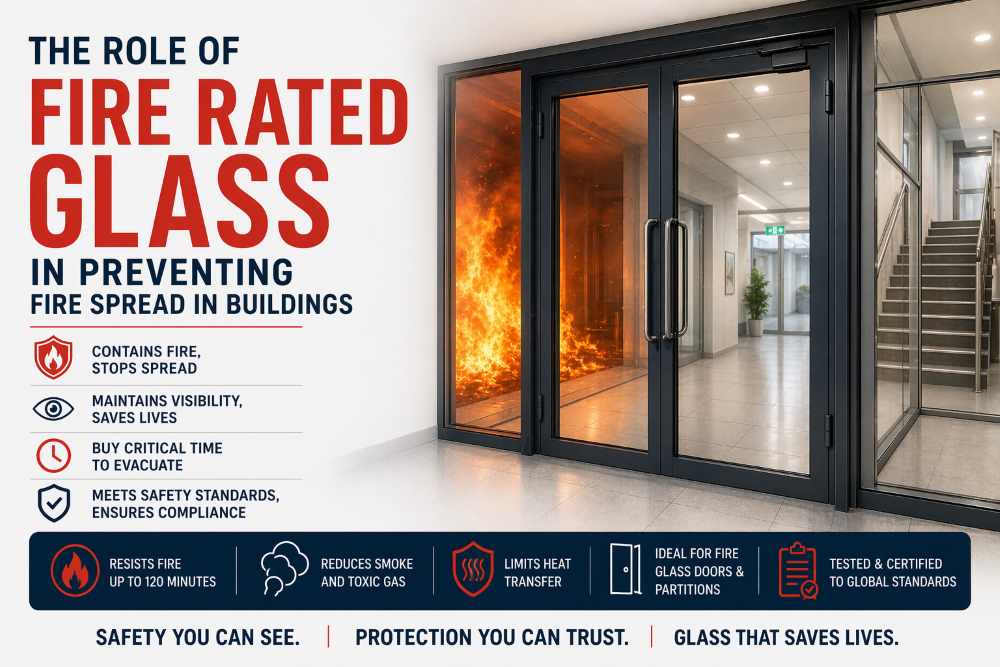
When a fire breaks out in a building, every second counts. The materials used in construction can either slow the fire down or let it race through the entire structure in minutes. One of the most powerful yet often overlooked tools in fire safety is fire rated glass. It looks just like regular glass, but it is engineered to do something extraordinary: stop fire in its tracks.
What Exactly Is Fire Rated Glass?
Fire-rated glass is a specially manufactured glass that can withstand high temperatures and resist the spread of fire and smoke for a defined period of time — typically 30, 60, or even 120 minutes. Unlike ordinary glass that shatters within minutes of fire exposure, fire rated glass is built to hold its ground.
It comes in different types, including tempered glass, ceramic glass, wired glass, and specially laminated glass. Each type is tested and certified to meet strict fire safety standards. The rating on the glass tells you exactly how long it can perform under fire conditions.
Think of it as a transparent firewall — offering both visibility and protection at the same time.
How Does Fire Spread in a Building?
To understand the value of fire rated glass, it helps to understand how fire actually travels inside a building.
Fire spreads through three main paths:
- Direct flame contact — fire physically touching surfaces
- Radiant heat — invisible heat waves that can ignite nearby materials without direct contact
- Hot gases and smoke — which travel fast through gaps, corridors, and openings
Ordinary glass fails quickly in a fire. It cracks, breaks, and falls away — creating large openings for flames, smoke, and toxic gases to rush through. This can turn a small, contained fire into a building-wide emergency within minutes.
Fire rated glass is designed to block or significantly slow all three of these pathways.
The Silent Guardian: How Fire Rated Glass Works
Fire rated glass does its job through a combination of materials science and smart engineering.
Some types contain intumescent interlayers — special materials sandwiched between glass panes that expand when exposed to heat. This expansion creates a thick, insulating barrier that blocks both heat and flames. Other types use ceramic materials that can handle extreme temperatures without cracking or shattering.
Fire proof glass is also tested to stop radiant heat transmission which is critical. A pane of glass can technically stay intact during a fire, but if it is radiating intense heat, it can still ignite furniture and materials on the other side. The best fire rated glass solutions address this by limiting how much heat passes through.
The result? A barrier that keeps fire on one side while giving people on the other side precious time to evacuate safely.
Where Is Fire Rated Glass Used in Buildings?
Fire rated glass is not just for one specific part of a building — it has a wide range of applications wherever fire barriers are needed without sacrificing light or visibility.
Fire Glass Doors
One of the most common uses is in fire glass doors. These doors are installed in corridors, stairwells, lobbies, and between different fire zones in a building. They look sleek and modern, but they serve a critical safety function — compartmentalising the building so fire cannot easily move from one area to another.
Fire glass doors are especially popular in commercial buildings, hospitals, hotels, and schools where maintaining clear sightlines and an open feel is just as important as safety compliance.
Partition Walls and Screens
Large glass partition walls fitted with fire rated glass can divide office spaces, lobbies, or corridors into separate fire compartments. In the event of a fire, these partitions hold the fire back while allowing evacuation routes to remain visible.
Stairwell Enclosures
Staircases are one of the most dangerous fire pathways in a building — they act like chimneys, pulling smoke and heat upward rapidly. Enclosing stairwells with fire rated glass keeps escape routes smoke-free and visible, which is critical for safe evacuation.
Facades and External Glazing
In high-rise buildings, fire rated glass is sometimes used in external facades to prevent fire from jumping between floors — a phenomenon known as “vertical fire spread.”
Key Benefits of Using Fire Rated Glass
Installing fire rated glass is not just about meeting building codes — it delivers real, tangible benefits.
1. Buys Critical Evacuation Time Every minute matters during a fire. Fire rated glass can hold a fire at bay for 30 to 120 minutes, giving occupants time to evacuate and emergency services time to respond.
2. Stops Smoke as Well as Flame Smoke causes more deaths in fires than flames do. Quality fire rated glass — especially when used in fire glass doors and sealed partitions — helps contain smoke, keeping escape routes breathable.
3. Maintains Visibility Unlike solid walls, fire rated glass allows people to see through it. This helps occupants find exits quickly and helps firefighters identify where the fire is located.
4. Meets Safety Standards and Building Codes Most modern building codes require fire-rated assemblies in specific locations. Using certified fire proof glass ensures your building is compliant and reduces liability.
5. Aesthetic Appeal Without Compromise Fire rated glass looks exactly like regular glass. It supports open, modern architectural designs without forcing you to choose between beauty and safety.
Choosing the Right Fire Rated Glass for Your Building
Not all fire rated glass is the same. Here are a few things to consider when choosing:
- Fire rating duration — Do you need 30, 60, or 120 minutes of protection? This depends on the size of the building, occupancy type, and local fire safety regulations.
- Integrity vs. insulation — Some fire rated glass only maintains structural integrity (stops flames and smoke), while others also provide thermal insulation (stop radiant heat). For areas close to escape routes or where people may be nearby, insulating glass is the safer choice.
- Framing system — The glass must be paired with a compatible rated frame. Even the best fire proof glass will underperform if the surrounding frame is not fire-rated.
- Certification — Always look for glass that has been independently tested and certified to recognised fire safety standards.
At Elixir Engineering, we help architects, builders, and facility managers choose the right fire rated glass systems for their specific needs — combining safety, compliance, and design in every project.
Don’t Leave Fire Safety to Chance
Fire rated glass is one of those building elements that works quietly in the background until the day it truly matters. It does not just tick a box on a compliance checklist. It saves lives, protects property, and gives people the precious time they need to get out safely.
Whether you are designing a new building or upgrading an existing one, incorporating fire rated glass — especially in fire glass doors, stairwells, and partition walls — is one of the smartest decisions you can make.
Elixir Engineering specialises in high-performance glazing solutions, including a full range of fire rated glass systems built for safety, compliance, and design excellence. Get in touch with our team today to find the right solution for your project.
Frequently Asked Questions
1. Is fire rated glass the same as tempered or toughened glass?
No — they are different. Tempered glass is designed for impact resistance, not fire resistance. While some fire rated glass uses tempering as part of its construction, regular tempered glass will shatter quickly in a fire. Always check for a specific fire rating certification.
2. How long can fire rated glass actually hold back a fire?
Depending on the type and thickness, fire rated glass can resist fire for 30, 60, 90, or even 120 minutes. The right duration depends on your building’s fire safety plan and local regulations.
3. Can fire glass doors be used in everyday settings, or do they look industrial?
Modern fire glass doors are designed to look sleek and elegant. They are widely used in offices, hotels, hospitals, and residential buildings without standing out as “safety equipment.” You get protection without compromising your interior design.
4. Does fire rated glass also block smoke?
Yes — when properly installed in a fully rated assembly (including rated frames and seals), fire rated glass can significantly limit smoke passage. This is one of its most important life-safety benefits.
5. Is fire proof glass expensive compared to regular glass?
Fire proof glass does cost more than standard glass, but it should be seen as a long-term investment. The cost of a fire — in lives, property damage, business disruption, and legal liability — far outweighs the upfront cost of proper fire safety glazing.
6. Who should I consult to install fire rated glass in my building?
Always work with a certified and experienced glazing and fire safety specialist. At Elixir Engineering, our team can assess your building’s needs, recommend the right products, and ensure installation meets all required standards. Visit us at www.elixirengg.com to learn more.