Top Fire Resistant Material Options for Safer Homes and Buildings
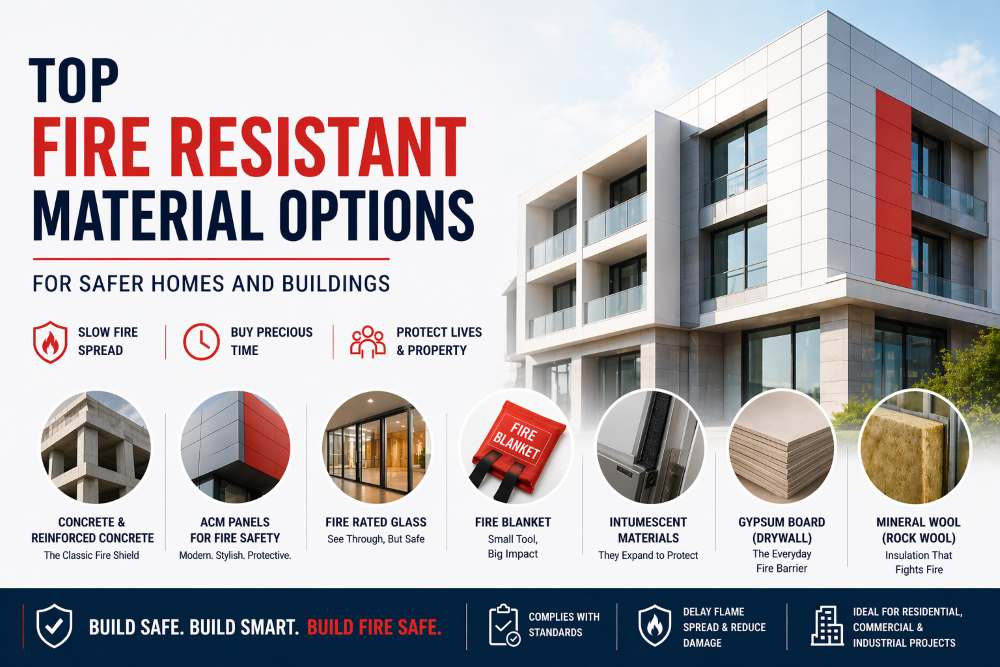
Fire can destroy everything in minutes. Whether it’s a home, office, or a large commercial building, fire safety is something no one should ignore. One of the smartest ways to protect any structure is by choosing the right fire resistant material during construction or renovation.
Why Fire Resistant Materials Are More Important Than Ever
Modern buildings are filled with furniture, wiring, plastics, and materials that catch fire quickly. Once a fire starts, it can spread within seconds. Fire resistant materials don’t just slow down flames — they buy precious time for people to escape and for emergency services to respond.
Using the right fire resistant material in walls, ceilings, windows, and facades can mean the difference between a minor incident and a catastrophic loss.
1. Concrete and Reinforced Concrete — The Classic Fire Shield
Concrete has been a go-to building material for centuries, and for good reason. It does not burn, it doesn’t release toxic fumes when exposed to heat, and it holds up well under very high temperatures.
Reinforced concrete, which has steel rods inside, takes this a step further. It adds structural strength while maintaining fire resistance. Concrete walls and floors are commonly used in fire-rated construction because they can withstand flames for several hours without collapsing.
Best used for: Floors, walls, columns, and structural cores in residential and commercial buildings.
2. ACM Panels for Fire Safety — Modern, Stylish, and Protective
ACM (Aluminium Composite Material) panels have become extremely popular in modern architecture. They’re lightweight, visually appealing, and offer great durability. But not all ACM panels are the same when it comes to fire safety.
Standard ACM panels have a plastic core that can be flammable. However, fire-rated ACM panels are manufactured with a mineral-filled or fire-resistant core that significantly reduces flame spread. These panels are tested under international standards and are designed to meet strict fire safety codes.
ACM panels for fire safety are widely used in:
- High-rise building facades
- Commercial complexes and malls
- Hospitals and educational institutions
- Airports and transport hubs
When selecting ACM cladding for any project, always check for fire classification ratings. At Elixir Engineering, we supply and install certified fire-rated ACM panels that meet global safety standards, giving your building both great looks and strong fire protection.
3. Fire Rated Glass — See Through, But Safe
Who says fire protection has to block your view? Fire rated glass is a revolutionary material that allows natural light to pass through while acting as a barrier against flames, heat, and smoke.
Standard glass shatters quickly under heat. Fire rated glass, on the other hand, is specially engineered — it may be made of multiple layers of tempered or ceramic glass filled with a clear intumescent gel that expands when heated, blocking heat transfer.
Fire rated glass is classified by how long it can resist fire — commonly 30, 60, 90, or 120 minutes.
Where it’s used:
- Fire-rated doors and partitions
- Stairwell enclosures
- Corridor windows in hospitals and schools
- Office partition walls
It’s an excellent choice for buildings where visibility, aesthetics, and compliance both matter.
4. Fire Blanket — Small Tool, Big Impact
A fire blanket might seem simple compared to structural materials, but it plays a crucial role in fire safety — especially in kitchens, laboratories, and industrial spaces.
A fire blanket is made from fire-resistant woven glass fibre or other heat-resistant materials. It works by smothering a small fire, cutting off the oxygen supply and stopping the flames from spreading.
Fire blankets are:
- Easy to use — just pull and wrap
- Chemical-free — no mess, no damage
- Reusable in many cases
- Ideal for person-on-fire emergencies
Every kitchen, workshop, and laboratory should have a fire blanket within easy reach. It’s one of the most affordable yet effective fire safety tools available.
5. Intumescent Materials — They Expand to Protect
Intumescent materials are fascinating. When exposed to heat, they swell up (sometimes up to 50 times their original size), filling gaps and blocking the passage of fire and smoke.
They’re used in:
- Intumescent seals around fire doors to prevent smoke leakage
- Intumescent coatings on steel beams to delay structural failure
- Fire-stopping products around pipes and cables
These materials are invisible in everyday conditions, but they spring into action exactly when you need them most.
6. Gypsum Board (Drywall) — The Everyday Fire Barrier
Gypsum board, also known as drywall or plasterboard, is one of the most widely used fire resistant materials in interior construction. It contains water molecules within its chemical structure. When exposed to fire, this water is released as steam, slowing down heat transfer.
Type X and Type C gypsum boards are specially formulated with glass fibres for even better fire resistance. They’re used in:
- Interior walls and ceilings
- Partition walls in offices and hotels
- Fire-rated corridor walls
Gypsum board is affordable, easy to install, and offers reliable protection — making it a staple in fire-safe building design.
7. Mineral Wool (Rock Wool) — Insulation That Fights Fire
Mineral wool is made from natural rock or industrial slag. It’s primarily used as insulation, but its fire resistance is remarkable — it can withstand temperatures above 1,000°C without melting or catching fire.
Beyond fire resistance, mineral wool also:
- Provides excellent thermal and acoustic insulation
- Reduces the spread of smoke
- Is moisture resistant
It’s commonly found inside walls, roofs, and around structural steel to delay fire damage.
How to Choose the Right Fire Resistant Material
Choosing the right fire resistant material depends on several factors:
- Location — Is it for walls, ceilings, facades, or doors?
- Fire rating required — Check local building codes and safety standards
- Aesthetics — Some materials like fire rated glass and ACM panels offer visual appeal
- Budget — Balance cost with long-term protection value
- Application type — Residential, commercial, or industrial?
Working with an experienced engineering and supply partner makes this decision much easier.
Elixir Engineering — Your Fire Safety Material Partner
Choosing the right materials is only part of the picture. A thorough fire safety audit is equally important it helps identify vulnerabilities in your existing structure, spot gaps in compliance, and ensure every material and system is performing as it should. Think of it as a health check for your building’s fire defence. Skipping this step can leave hidden risks undetected, no matter how good your materials are.
Alongside that, installing an effective fire protection system is just as critical. Fire resistant materials slow down the spread of flames, but a complete fire protection system actively fights the fire and alerts people in time to evacuate safely. This includes sprinkler systems, fire suppression units, smoke detectors, fire alarms, and clearly marked emergency exits. When these systems work together with the right fire resistant materials, your building gets the strongest possible layer of protection.
At Elixir Engineering, we don’t just supply materials — we help you build a complete fire safety strategy. Whether you are starting a new construction project or upgrading an existing structure, our team is ready to guide you through material selection, safety audits, and fire protection system planning — every step of the way.
Frequently Asked Questions
1. What is the most common fire resistant material used in homes?
Gypsum board (drywall) is the most commonly used fire resistant material in homes. It’s affordable, easy to install, and provides solid protection by releasing moisture when exposed to heat, slowing down fire spread.
2. Are ACM panels safe for high-rise buildings?
Yes — but only if you choose fire-rated ACM panels with a mineral or non-combustible core. Standard ACM panels with plastic cores can be dangerous. Always look for panels that meet fire classification standards like EN 13501 or ASTM E84.
3. How long does fire rated glass last in a fire?
Fire rated glass is available in different ratings — typically 30, 60, 90, or 120 minutes. The right choice depends on your building’s fire safety plan and local regulations.
4. Can a fire blanket put out any fire?
A fire blanket works best on small, contained fires — like a burning pan on a stove or clothing catching fire. It’s not suitable for large structural fires. Always call emergency services for major fires.
5. Is fire resistant material expensive?
The cost varies by material. Gypsum board and mineral wool are quite affordable. Fire rated glass and fire-rated ACM panels may cost more upfront, but they offer long-term protection and can reduce insurance premiums and liability risks — making them a worthwhile investment.
6. How do I know if a material is truly fire resistant?
Look for certified ratings from international testing bodies. Materials should carry labels or certificates showing their fire resistance class and test standard (e.g., Class A1, A2, or B under European standards). Always buy from trusted suppliers like Elixir Engineering who provide verified documentation.